
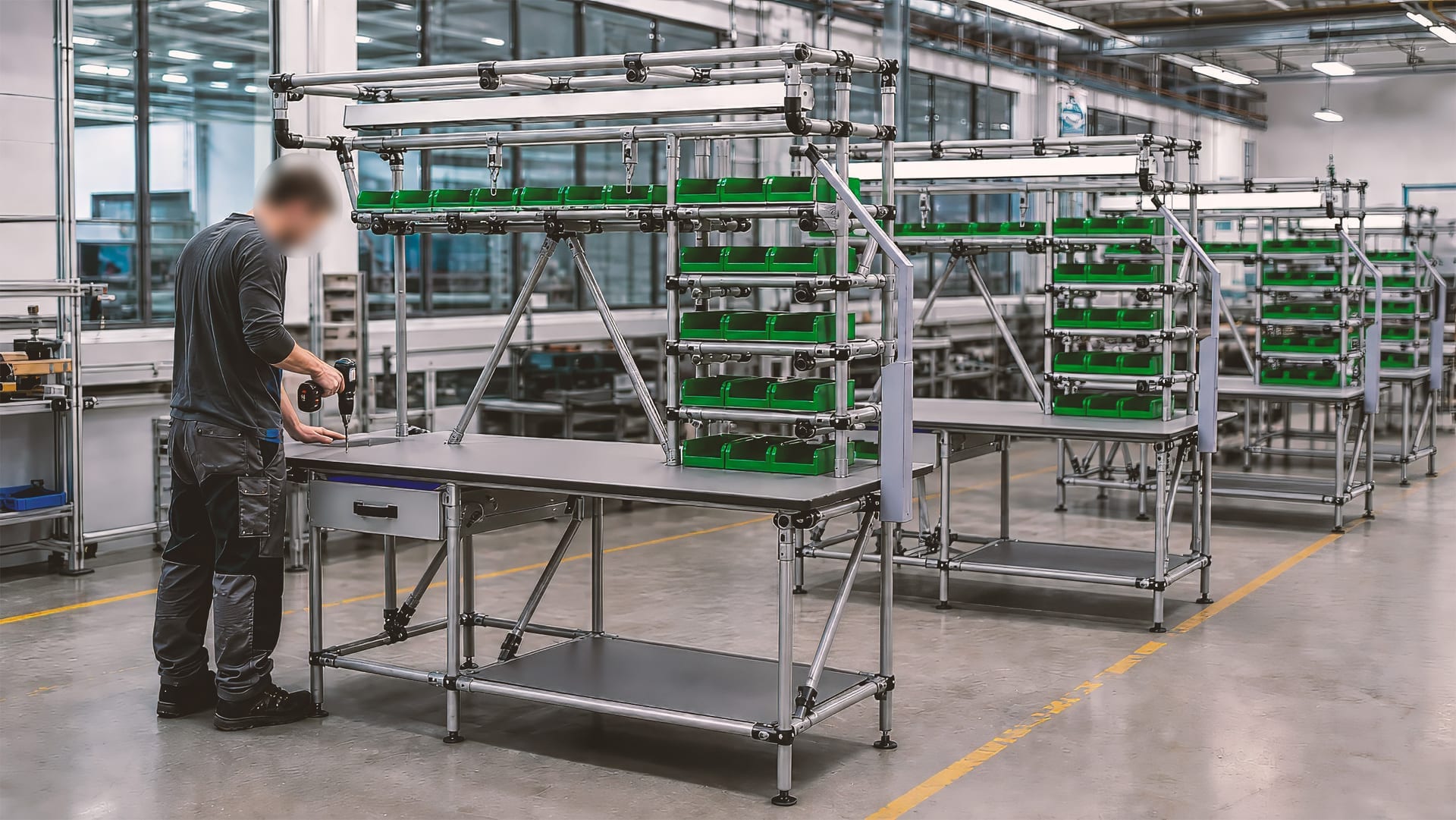
5S method: organize your industrial workshop so that improvement lasts
The 5S method is often the first lean initiative rolled out in an industrial workshop. It is also the one that most often fails to stick over time - not because teams lack motivation, but because the furniture itself doesn't allow the new organization to last. Makitlean designs modular workstations so that your 5S program becomes a durable standard, not a one-off effort.
What is the 5S method? The 5 steps explained
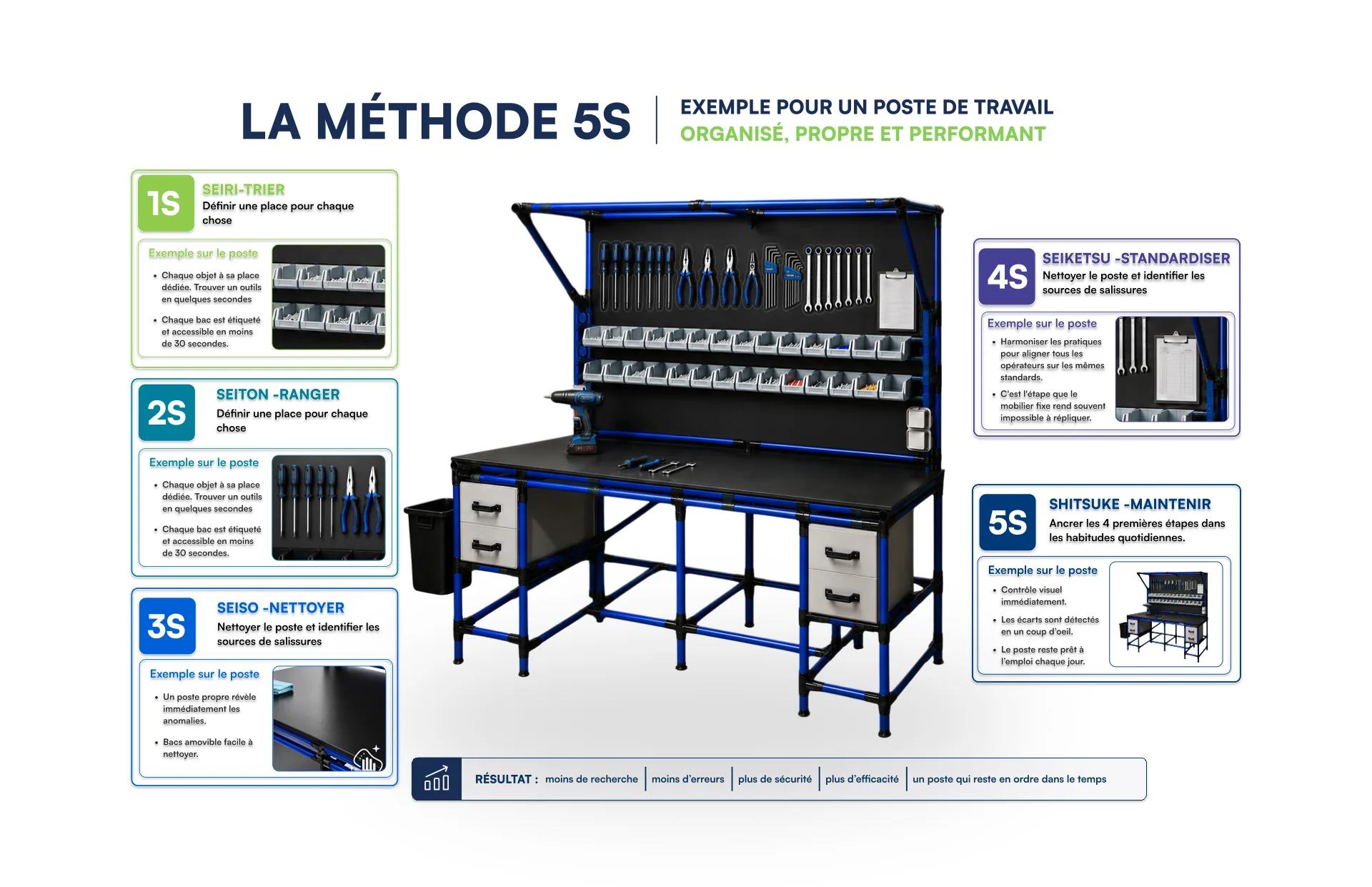
The 5S method takes its name from five Japanese words, each describing one step of organizing a workstation.
- 1S
Seiri
Sort
Eliminate everything that isn't needed at the workstation. Simple rule: if an item hasn't been used in the last 30 days, it doesn't belong here.
- 2S
Seiton
Set in order
Define a place for everything. Goal: find any tool in less than 30 seconds. Workstation design is decisive at this stage.
- 3S
Seiso
Shine
Clean the workstation and identify sources of dirt to eliminate them for good. A clean station instantly reveals anomalies.
- 4S
Seiketsu
Standardize
Formalize the rules of organization so every operator applies the same standards across similar workstations. This is the step that fixed furniture often makes impossible to replicate.
- 5S
Shitsuke
Sustain
Anchor the first four steps in daily habits. The 5th S is the hardest to hold without a physical environment built for it.
Why most 5S programs don't last over time
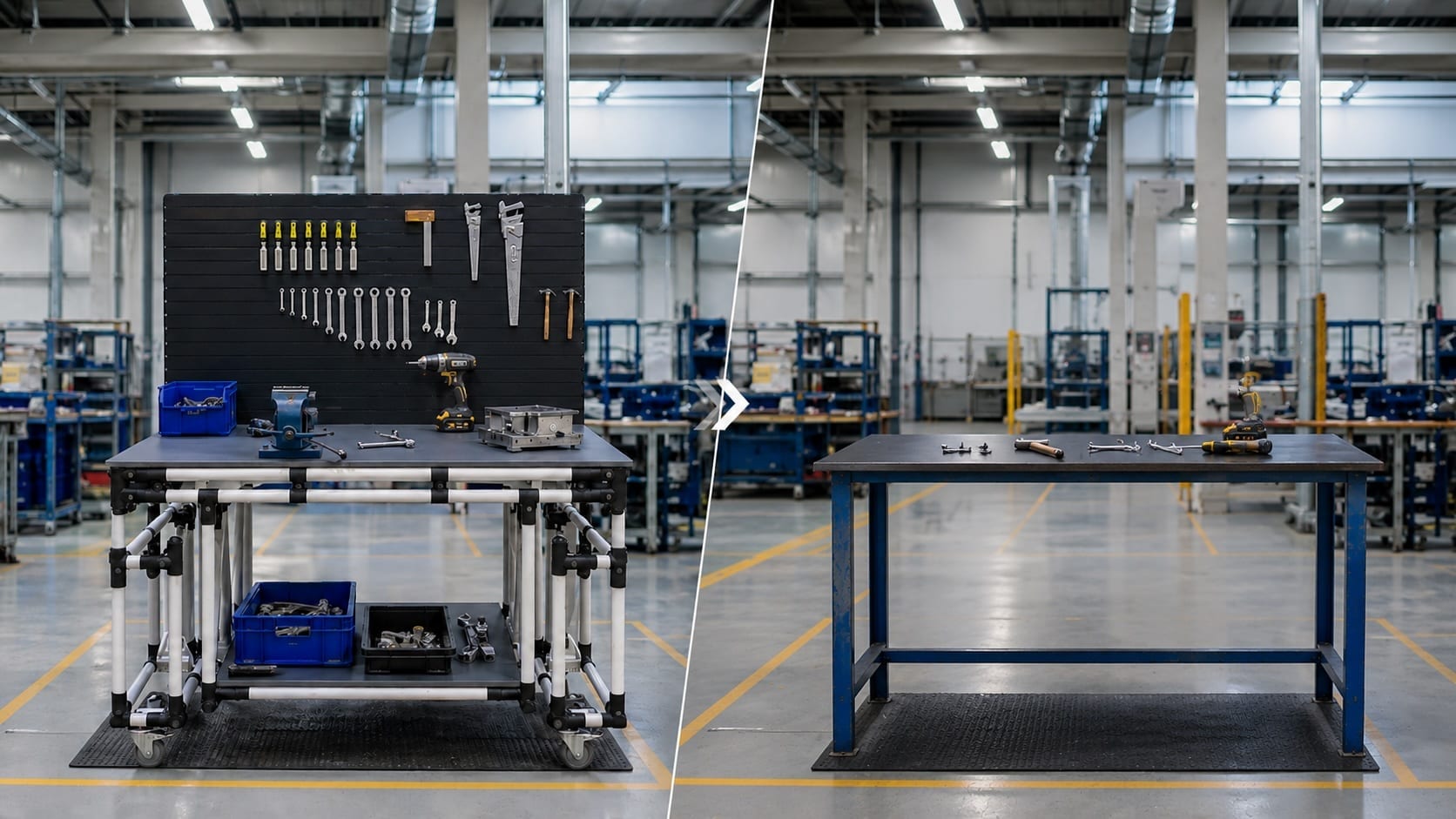
Here's what we see again and again: the 5S effort was carried out seriously. The before/after photos are impressive. Six months later, the workshop has reverted to its old habits.
The cause is almost always the same: the furniture wasn't designed to host the new organization. Makeshift storage, surfaces that accumulate clutter, workstations impossible to replicate from one area to another.
5S is not an event - it's a permanent state, and it can only be sustained if the workstation has been designed for it from day one.
Makitlean workstations designed for sustainable 5S
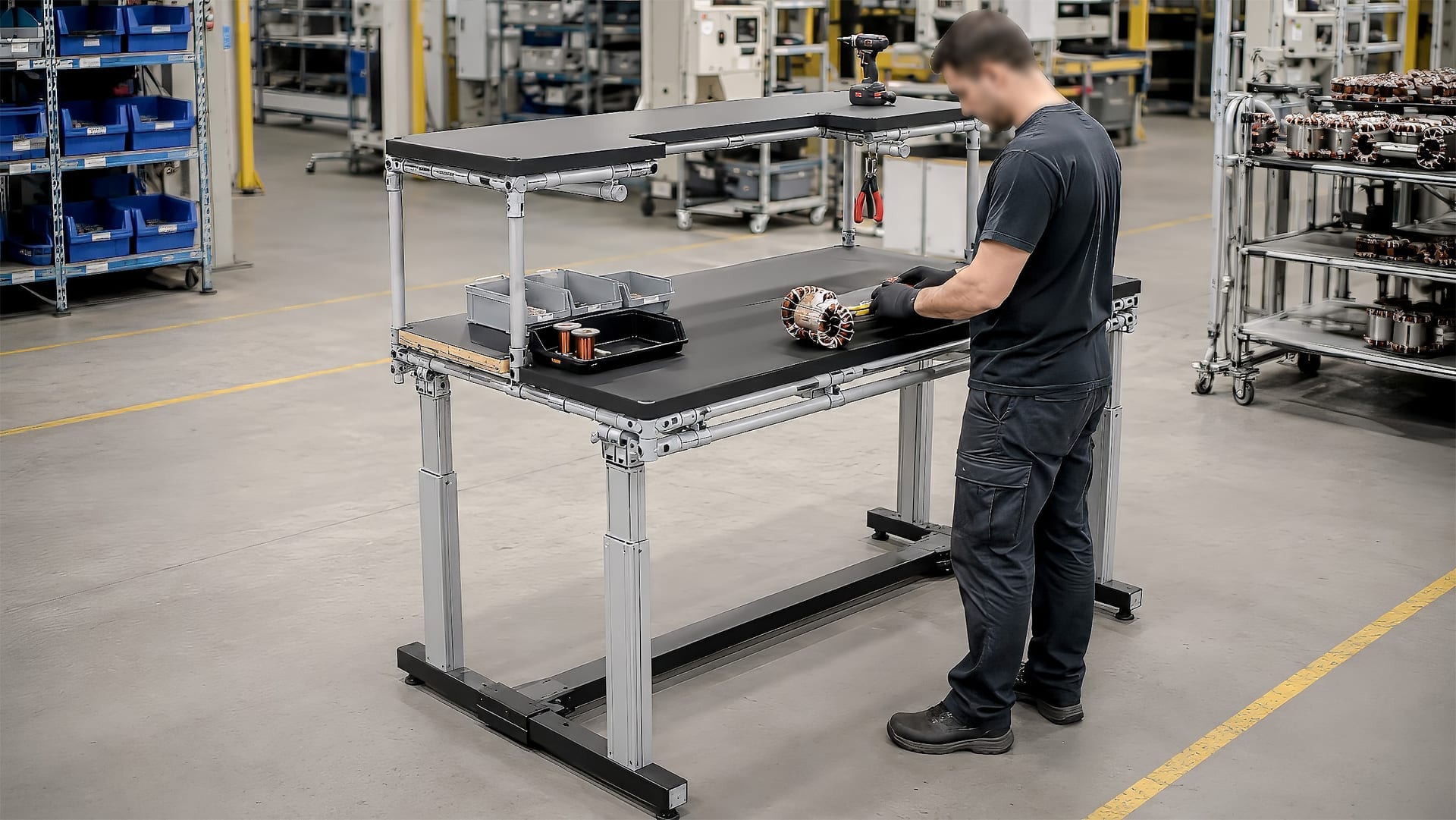
At Makitlean, every workstation integrates 5S requirements right from the engineering phase.
Defined, labelable locations for every tool
Reproducible configurations from one workstation to the next
Modular structures that adapt when the process evolves
Surfaces designed for daily cleaning, no blind spots
The fundamental difference: you no longer apply 5S despite your furniture. You apply it thanks to it.
What our customers observe when deploying 5S on Makitlean workstations
30 min
saved per operator per day on tool-search time
> 90%
5S sustainment rate at 12 months (vs 40-60% on standard furniture)
×2
acceleration of subsequent kaizen events
Frequently asked questions about the 5S method
How long does a 5S project take?
+An initial project focused on a pilot zone (5 to 10 workstations) takes 3 to 5 days. Full deployment takes another 4 to 8 weeks.Do I have to replace all my furniture?
+No, 5S can be applied on any furniture. But long-term success depends directly on how well the workstation fits the intended organization.How do you measure the effectiveness of a 5S project?
+Monthly 5S audit score (out of 100), tool-search time measured before/after, number of anomalies detected during visual rounds.
Go further: related solutions
The 2nd S (Seiton, set in order) takes a tangible form in concrete equipment.
Your next 5S project deserves a workstation built to last
A Makitlean audit is 30 minutes to analyze your current workstations, identify what is blocking your 5S over time, and propose a tailored approach.
No commitment · Reply within 24h · Audit run by our engineers
Discover all our lean manufacturing solutions