
Kanban Board
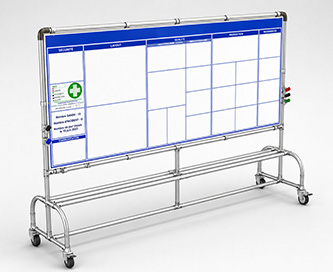
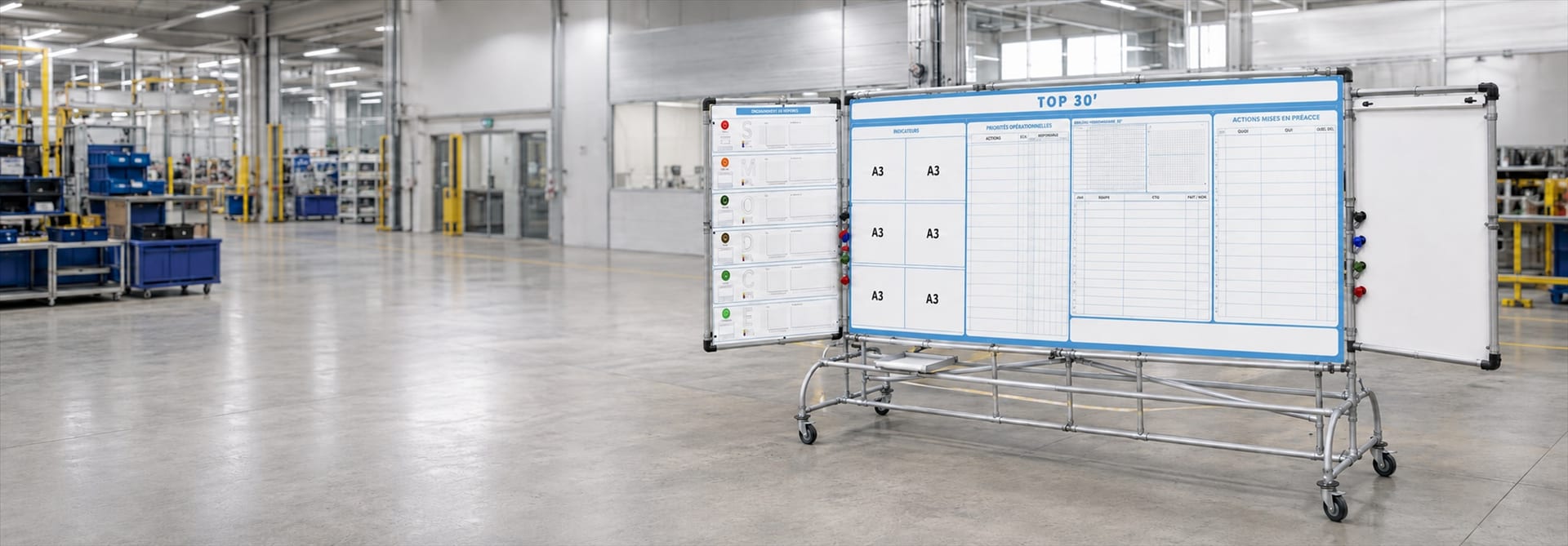
The Kanban board is the nerve center of visual management. Magnetic lacquered surface, permanent silk-screening, wall-mounted or mobile on casters: our Makitlean boards structure your flows, limit WIP and accelerate continuous-improvement rituals.
À partir de479 €HT
See our projects
100% customizable, locally made, visualize flow and limit WIP daily
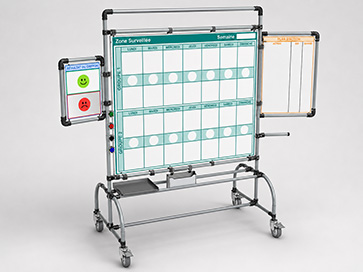
Tableau Kanban
Explore a similar need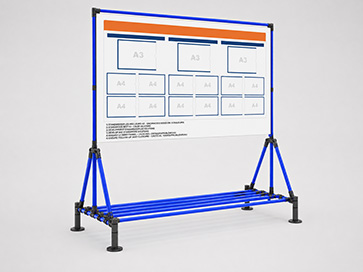
Tableau Kanban
Explore a similar need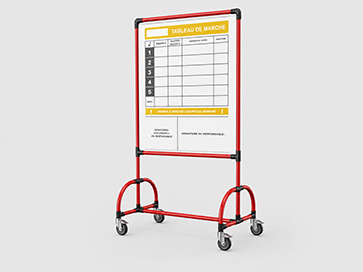
Tableau Kanban
Explore a similar need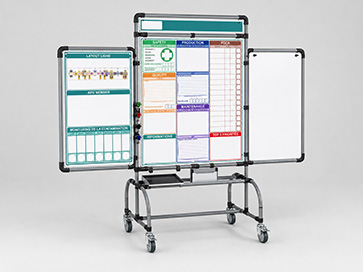
Tableau Kanban
Explore a similar need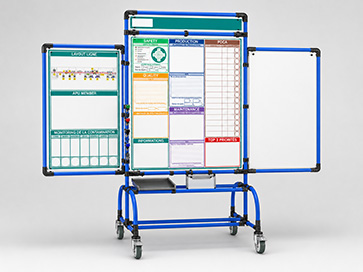
Tableau Kanban
Explore a similar need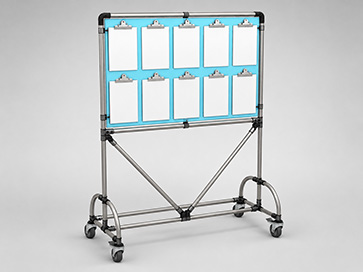
Tableau Kanban
Explore a similar need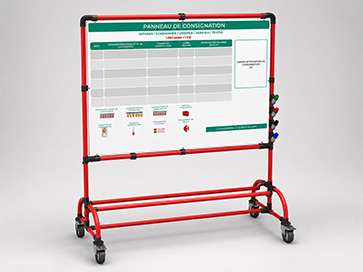
Tableau Kanban
Explore a similar need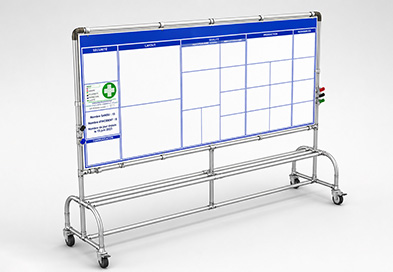
Tableau Kanban
Explore a similar need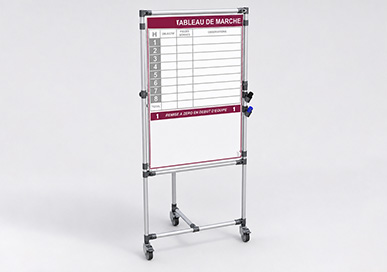
Tableau Kanban
Explore a similar need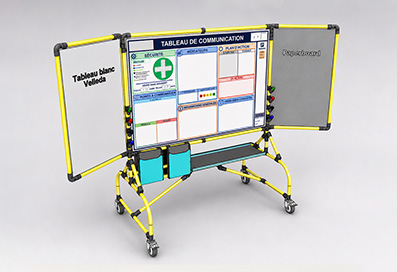
Tableau Kanban
Explore a similar need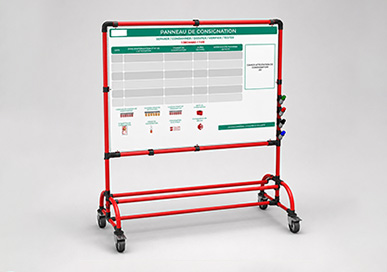
Tableau Kanban
Explore a similar need
Key features of a Kanban board
A high-performance visual control tool, designed to structure flow and bring lean rituals to life.
Structured columns (To do, In progress, Done), customizable
Magnetic surface to attach Kanban cards, photos, labels
Immediate WIP visualization and bottleneck identification
Wall-mounted or mobile on casters depending on your rituals
Compatible with pull flow, Kanban replenishment, Heijunka planning
Nerve center of visual management and continuous improvement
What types of Kanban boards exist?
Depending on your rituals and flow, several configurations exist:
Production Kanban board
Visualizes production flows in columns (preparation, in progress, inspection, shipped) with cards per reference or work order. Central tool of pull flow in the workshop.
Replenishment Kanban board
Manages buffer-stock replenishment: each card represents an emptied bin. Simple, robust system, no software needed.
Team / project Kanban board
To run Kaizen projects, cross-functional projects or maintenance teams: To-do / Doing / Done with assignment and deadlines.
Mobile wheeled Kanban board
Double-sided, height suited to standing position, secure braking. Ideal for daily stand-ups and multi-site workshops.
Lean / visual management board
Combines several zones: indicators (SQCDP), problem solving (A3, PDCA), improvement planning. The Kanban board is part of it.
Custom Kanban board
Designed for your flow: number of columns, card types, WIP zones, silk-screening, accessories (marker holders, card trays). 100% customizable.
Criteria for choosing your Kanban board
4 dimensions to balance to make the right choice.
Type of flow to control
For a production flow with identified work orders, prefer a board with vertical columns and one card per work order progressing left to right. For a Kanban replenishment system (bin restocking), one card per bin is enough, with a "cards waiting" zone and a "bins to produce" zone. For team / project Kanban, organize in swim lanes by person or project to visualize loads.
Mobility and place of use
A wall-mounted board offers a permanent location and stable installation, perfect for recurring rituals (daily team meeting, Obeya room). A wheeled board brings flexibility: bring it to the line for a Gemba walk, store it between rituals. Prefer double-sided models with secure braking for intensive workshop use.
Format and column count
Column count depends on your Value Stream. Three columns (To do / In progress / Done) suffice to start; add columns based on your steps (inspection, validation, shipping). Avoid exceeding 7 columns; beyond that, the board becomes unreadable. Size the height so a standard card stays visible at 3 m distance (standing ritual).
Accessories and customization
Lacquered magnetic surface (for magnetic cards) or enameled (greater resistance). Permanent silk-screening of columns and zones (logos, KPIs, legends). Optional marker holders, card trays, visual WIP zones, light indicators (andon). For demanding workshops, shock-proof finish and isopropyl alcohol cleaning compatible.
Essential components of a Kanban board
Every MaKitLean board integrates components designed for legibility, durability and daily use:
Lacquered magnetic surface
Steel base + lacquered coating combining erasable marker writing and magnetic attachment. Cleanable with isopropyl alcohol for industrial use.
Customizable Kanban cards
Laminated or magnetic cards, silk-screened in A6 or A7 format, with predefined fields (reference, quantity, date, operator). Color-coded by family.
Tubular structure or wall-mount
Lacquered steel wall-mount for permanent locations, or galvanized steel tubular structure with braked casters for the mobile version. Double-sided possible.
Permanent silk-screening
Columns, legends, WIP zones and indicators silk-screened directly on the surface. Guarantees visual coherence and resists intensive use.
Visual management accessories
Marker holders, card trays, A4 sleeves, andon indicators, standard sheet holders (A3, PDCA). Customizable to your rituals.
Frequently asked questions
What's the difference between a Kanban board and a visual management board?
+The Kanban board is a subset of visual management, focused on flow visualization. It organizes work in columns representing stages (To do, In progress, Done) and uses mobile cards to track progress. The visual management board is broader: it integrates indicators (SQCDP), problem solving (A3, PDCA), planning of improvement projects. In a mature workshop, Kanban is often a dedicated zone of the overall lean board.How to choose between a wall-mounted Kanban board and a mobile wheeled model?
+The choice depends on your rituals and space. A wall-mounted board saves floor space and offers a stable location, ideal for Obeya rooms, permanent production zones or recurring rituals (daily). A mobile board brings flexibility: it follows you to the line for a Gemba walk, changes teams as needed, stores between activities. Most mobile models are double-sided, doubling display capacity. For a Kanban kick-off or multi-site environment, mobile is often the right choice.How many columns to plan on a Kanban board?
+It all depends on your Value Stream. Three columns (To do / In progress / Done) suffice to start a team Kanban or a Kaizen. For production Kanban, add the key stages: preparation, in progress, inspection, shipped. A "blocked" column is useful to make obstacles visible. Avoid exceeding 6-7 columns; beyond that, the board becomes hard to read during a stand-up and critical information is lost. Better two specialized boards than one saturated.How to maintain a magnetic Kanban board so it lasts?
+For daily maintenance, use a special whiteboard eraser or a dry microfiber cloth. For stubborn marks, a specific whiteboard cleaner (no standard household product that damages the lacquer). Monthly, deep clean with isopropyl alcohol (90%) diluted with 10% water, dried immediately. Ghost marks can be removed with non-abrasive white toothpaste. Avoid permanent markers and abrasive products. Well-maintained, a MaKitLean Kanban board keeps its magnetic and writing properties for 10 to 15 years.
Ready to structure your flows?
Our engineering office designs every board to measure based on your flow: columns, cards, silk-screening, mobility.